✅ Strategy · Winning Habits

10 Poker Habits Winning Players Have

The gap between winners and break-even grinders is rarely raw talent — it's what happens on every hand, and every day away from the table.

10 Poker Habits Winning Players Have

Two players can know roughly the same amount about ranges and frequencies and still post very different results over a year. The difference usually isn't hidden technical knowledge — it's a handful of unglamorous habits, repeated on every hand and every session, that most players know about and few actually practice consistently. Here are the ten that separate winners from everyone else.

At a Glance

The 10 Habits

  • They play fewer hands, but better hands
  • They think before every decision, not just when facing an all-in
  • They respect position and use it to their advantage
  • They manage their bankroll instead of chasing losses
  • They review their sessions and learn from mistakes
  • They stay calm after bad beats and avoid tilt
  • They adjust to different opponents instead of playing one strategy
  • They focus on +EV decisions, not short-term results
  • They never stop studying — strategy, GTO, HUD stats, mental game
  • They understand poker is a marathon, not a sprint
Habits #1–5

At the Table

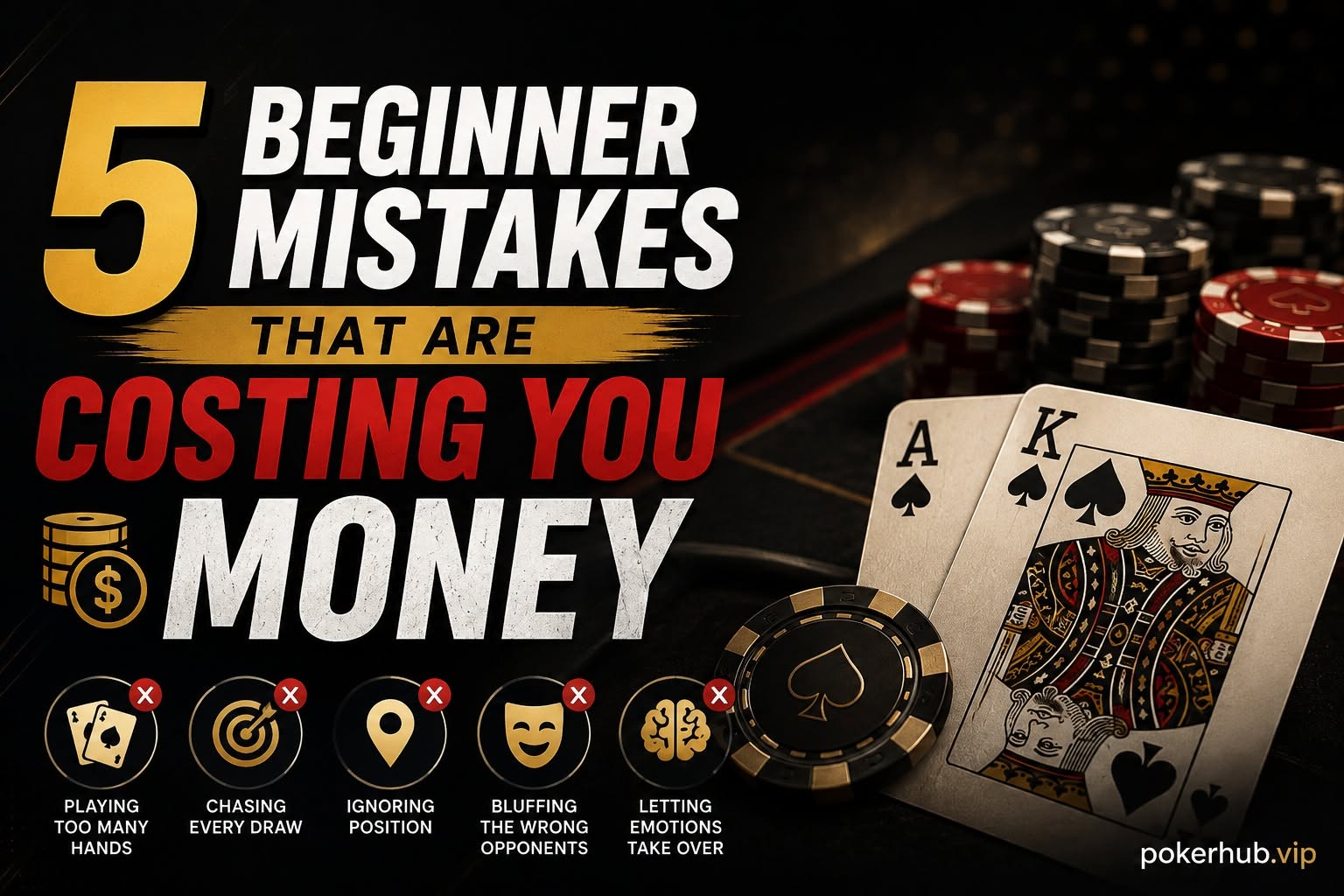
1. They play fewer hands, but better hands. Every marginal hand a winning player folds is a hand they aren't giving away money with. Tightening up, especially from early position where more players are still left to act, cuts out a huge share of the spots that quietly bleed a bankroll over thousands of hands. It's a less exciting style of poker. It's also a more profitable one.

2. They think before every decision, not just when facing an all-in. It's easy to lock in and focus only on the big, scary decisions — but small, seemingly automatic bets and calls add up to far more total money over a session than the rare all-in ever will. Winning players treat every street, including the boring ones, as a decision worth a few seconds of real thought.

3. They respect position and use it to their advantage. The later you act, the more information you have — you've already seen how everyone else responded before you have to move. That information is worth real money: it supports wider opening ranges from late position and tighter ones from early position, and it's one of the simplest, most reliable edges available at every stake.

4. They manage their bankroll instead of chasing losses. Winning players keep enough buy-ins in reserve to survive a normal downswing, move down in stakes without ego when the bankroll calls for it, and never play a stake where one bad session threatens their ability to keep playing at all. Chasing a loss by moving up to "win it back" is one of the fastest ways to turn a manageable downswing into a real problem.

5. They review their sessions and learn from mistakes. Volume alone doesn't improve your game — reviewed volume does. Going back through a session's toughest hands with a clear head, ideally a day later, surfaces patterns that were invisible in the moment. A leak you never look for is a leak you never fix.

Habits #6–10

Off the Table

6. They stay calm after bad beats and avoid tilt. A bad beat is frustrating, but chasing the loss by playing looser or more aggressively almost always turns one bad result into two. The math of the last hand has no bearing on the next one. For a closer look at what actually causes tilt and how to build resistance to it, see our guide on Mental Game & Tilt Control.

7. They adjust to different opponents instead of playing the same strategy every time. A balanced, default strategy is the right baseline against an unknown player — but against a calling station who never folds, or a nit who only shows up with the nuts, sticking rigidly to that baseline leaves value on the table. Winning players update their strategy as soon as a real read shows up.

8. They focus on making +EV decisions, not short-term results. A correct all-in can lose, and an incorrect call can win — variance doesn't check whether a decision was right before deciding the outcome. Judging your play by whether a hand won or lost, rather than whether the decision was profitable in the long run, is one of the most common ways players talk themselves out of good habits.

9. They never stop studying — strategy, GTO, HUD stats, and mental game. The players staying ahead treat their edge as something that needs maintenance, not something earned once. That means revisiting solver-based concepts (see our GTO Fundamentals primer), reading their own HUD stats honestly, and treating the mental side of the game as seriously as the technical side.

10. They understand that poker is a marathon, not a sprint. Any single session, week, or even month can go against a perfectly sound strategy — that's just variance doing what variance does. Winning players build habits that hold up over a career, not just over a good week, and they measure themselves against that much longer timeline.

Ready to Put It Into Practice?

Good habits compound fastest at rooms with soft, beatable fields.

Related